The Restaurant Owner Who Thought It Was the HVAC
One McCordsville restaurant owner called us in August convinced his rooftop unit was leaking condensate into the dining room. He had already paid an HVAC company $600 to come out twice. When we got on the roof, the unit was dry. The problem was thirty feet away, where a seam on the EPDM membrane had opened about eighteen inches. Rain was tracking under the membrane, running along a low spot, and finding a fastener penetration right above his booth seating. We cleaned the area, primed it, and installed a new cover strip with seam tape and lap sealant. Total repair came in under $900, and he has been dry for two winters now. The lesson we share with every flat roof client in McCordsville: water rarely leaks where you see the stain. It travels. A good flat roof leak detection and repair process traces water back to its actual entry point, not just the nearest wet ceiling tile.
The Warehouse With Four Years of Ponding
A light industrial property owner off the south side of McCordsville asked us to quote a full replacement on a 12,000 square foot TPO roof. Another contractor had told him the ponding near his drains was proof the roof was shot. We spent two hours up there with a moisture meter and a core sample kit. The membrane was eleven years old with probably eight years of life left. The ponding was real, but it was caused by clogged internal drains and a sagging section of decking near a skylight curb. We cleared the drains, installed tapered insulation crickets to redirect water, and replaced about 200 square feet of decking. He spent roughly $7,400 instead of the $62,000 replacement quote he had in hand. That is the kind of call that makes this work satisfying. You can read more about how we approach commercial roofing decisions if your building is in a similar spot.
How We Decide Repair Versus Replacement
When we walk a flat roof in McCordsville, we are running a mental checklist. How old is the membrane? Are the seams still sealed or are they curling and splitting? Is the insulation beneath the membrane wet (a moisture meter tells us in seconds)? Are the drains functioning? Is the decking sound? How many patches are already up there, and are they holding? If the membrane has five or more years of life left, the decking is solid, and the problems are localized, we repair. If the membrane is brittle, the insulation is saturated across large areas, or the deck has rot, we replace. There is no pride in either answer. The roof tells us what it needs, and we pass that along honestly. That is how McCordsville Roofing has built its reputation one building at a time.
The Addition That Was Built Wrong From Day One
Not every story ends with a repair. A homeowner in a McCordsville neighborhood called us about a flat roofed sunroom addition that had leaked since the day it was built in 2009. Three contractors had patched it. One had even overlaid a second membrane on top of the first. When we pulled back the cover, we found rotted decking, no tapered insulation, no proper flashing where the flat section tied into the main house sidewall, and standing water that had been sitting for years. This roof did not need another patch. It needed to be torn to the deck, re sheathed, flashed correctly, and rebuilt with a modified bitumen system and proper slope. The replacement ran about $14,200. We walked him through every step, showed him photos of the rotted framing we had to sister, and filed the final inspection paperwork. His sunroom has been dry through two full McCordsville winters. Sometimes roof replacement is the only honest answer, and when it is, we say so.
The Apartment Manager Who Called at 2 AM
A property manager for a small McCordsville apartment building phoned us during a February ice storm. Water was pouring through a third floor unit ceiling, and tenants were moving belongings into the hallway. When we arrived the next morning, the source was not hard to find. An ice dam had backed up behind a parapet wall where the flat roof met a taller section of the building. The scupper was frozen solid, and meltwater had nowhere to go except under the membrane. We steamed the ice out, installed a temporary patch over the compromised seam, and scheduled a proper repair once temperatures climbed above 40 degrees. Two months later, we added an overflow scupper and heat cable along the drainage path. He has not had a winter leak since. Flat roofs in McCordsville have to handle freeze thaw cycles that would never be an issue in warmer climates, and drainage redundancy matters more than most property owners realize.
The McCordsville Homeowner Whose Porch Roof Pooled After Every Rain
A McCordsville homeowner called about a low slope porch roof that left a shallow pond sitting for days after every rain, and a stain had started to show on the porch ceiling below. The membrane itself was not old, which had confused them, but it had been installed dead flat with no real path to the drain, so water simply had nowhere to go. The fix was not a new membrane, it was correcting the drainage: we added tapered insulation to build a slight, deliberate slope toward the drain and rebuilt the flashing at the wall where water had been backing up. After that, the surface dried within hours of a rain instead of holding water for days, and the ceiling stain stopped spreading. It was a clear case of a flat roof problem that was really a slope and drainage problem, which is how a surprising share of them turn out. We would rather correct the reason water sits than sell a homeowner a membrane that would have ponded just the same.
What These Calls Have in Common
After several hundred flat roof jobs across McCordsville and the surrounding area, a few patterns hold up every time:
- The leak is almost never where the stain shows up inside.
- Ponding that drains within 48 hours is normal. Ponding that sits for weeks is a symptom.
- Flat roofs fail at penetrations and transitions far more often than in open field membrane.
- An overlay (second membrane on top of the first) almost always hides problems instead of fixing them.
- A roof with a documented maintenance history lasts 25 to 30 percent longer than one that gets ignored until it leaks.
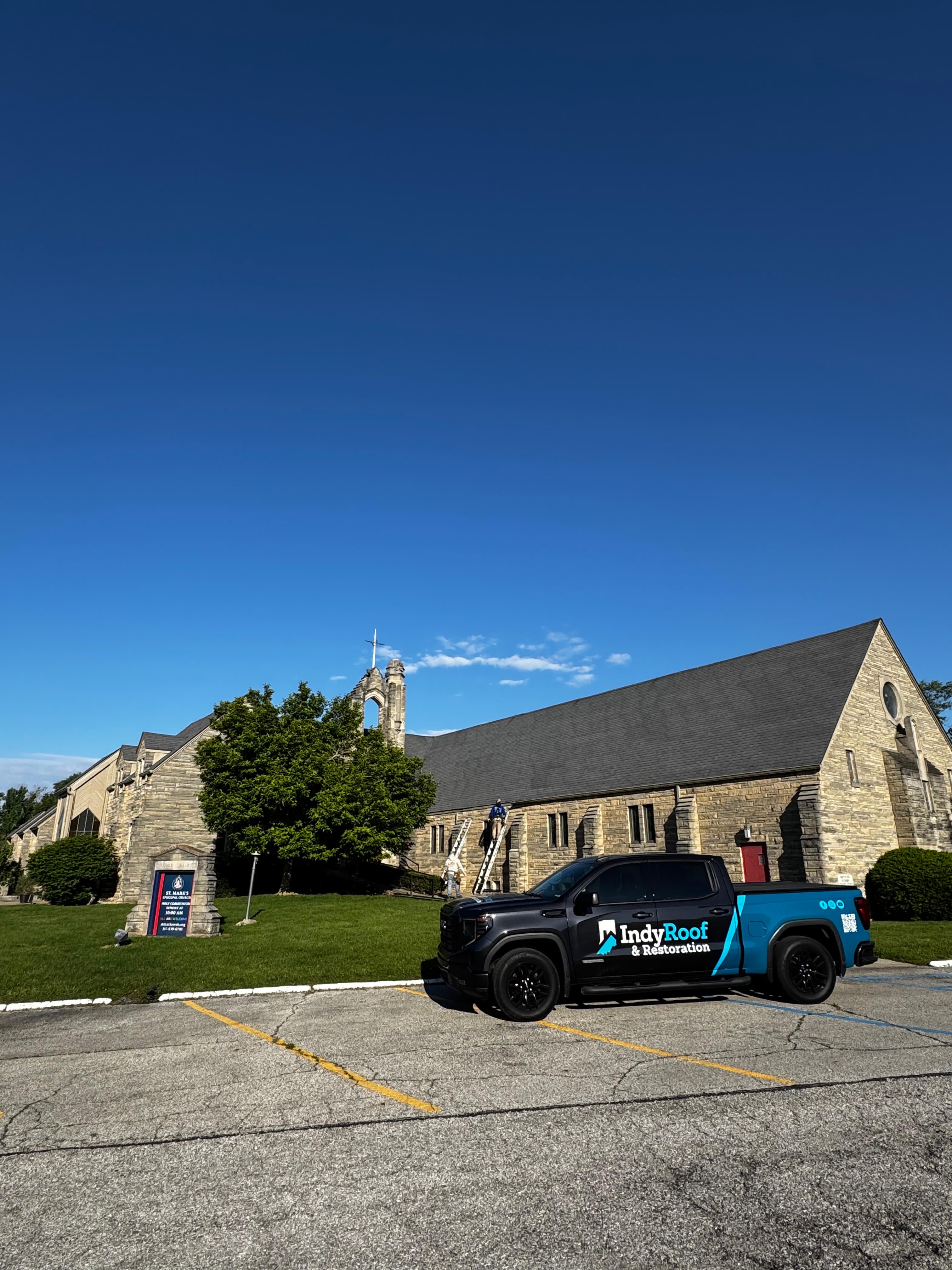
The Church Board That Wanted a Straight Answer
A small congregation in McCordsville had been told their 18,000 square foot built up roof needed immediate replacement after a hailstorm. The insurance adjuster had already denied the claim, saying the damage was wear and tear. We walked the roof with the board chair, marked every actual hail strike with chalk, and documented membrane bruising with close up photos and measurements. There were 47 verifiable impacts across the roof. We helped them reopen the claim with proper documentation, and the adjuster reversed course. The full replacement was covered minus the deductible. If your property has taken a hit, our team handles insurance claims work regularly and knows what adjusters need to see.